

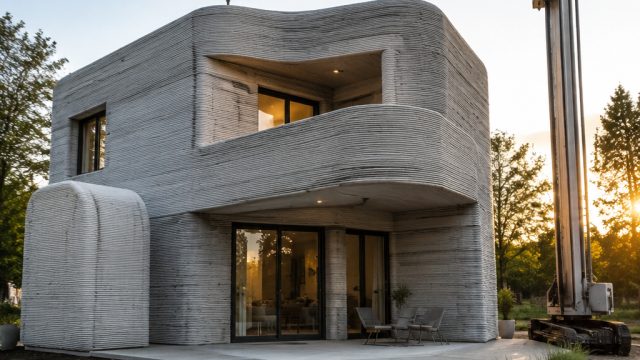
Revolutionizing Housing: 3D-Printed Homes Mark a New Era
The landscape of housing is on the brink of a major transformation as 3D-printed homes emerge as a viable solution to the ongoing housing crisis. With soaring property prices and a pressing need for affordable living spaces, the integration of technology in home construction has never been more critical. This revolutionary approach to building is not just about innovation; it's a necessary response to economic pressures affecting millions.
Why 3D-Printed Homes Matter Right Now
As the global economy faces fluctuations and market uncertainties, the demand for affordable housing is at an all-time high. The conventional construction methods are increasingly seen as outdated and inefficient. Enter 3D printing technology, heralded as a game-changer that holds the promise of affordability, sustainability, and speed.
Affordability and Speed
- Cost-effective production methods reduce material waste.
- Homes can be printed in a matter of days rather than months.
- Lower labor costs as automation takes center stage.
The Financial Backing Behind 3D Printing
The financial sector is increasingly recognizing the potential of 3D-printed homes. Investments from venture capitalists and traditional lenders are flowing into companies specializing in this technology. These financial backing mechanisms are vital as they facilitate research and development, paving the way for innovative solutions in residential construction.
Investment Trends in 3D-Printed Housing
Recent reports indicate a surge in funding aimed at startups that focus on 3D printing for construction. This trend highlights the growing confidence in the scalability of this technology. Investors are particularly interested in:
- Companies that demonstrate a clear blueprint for mass production.
- Projects that promise to reduce overall housing costs.
- Initiatives aiming to address environmental concerns.
Sustainability and Environmental Impact
With the ongoing climate crisis, sustainability is at the forefront of many housing discussions. 3D printing offers a path toward greener construction practices. By using eco-friendly materials and minimizing waste, the industry can significantly reduce its carbon footprint.
Eco-Friendly Building Materials
- Recycled plastics and waste materials are being used in construction.
- Innovative bioplastics are designed to be both durable and sustainable.
- Reduced emissions during the construction process through automated methods.
Challenges Ahead and the Future of 3D-Printed Homes
While the potential for 3D-printed homes is immense, several challenges remain. Regulatory hurdles, public perception, and the need for skilled operators in this new space are just a few of the obstacles that innovators must navigate. However, as more successful projects come to light, confidence in this technology is likely to grow.
Overcoming Barriers
- Establishing clear regulations to ensure safety and quality.
- Educating the public about the benefits and feasibility of 3D-printed homes.
- Training a workforce skilled in operating 3D printing technology.
Conclusion: A New Housing Paradigm
As we stand on the cusp of a new era in housing construction, 3D-printed homes could become a cornerstone of urban development worldwide. Their ability to offer a rapid, cost-effective, and environmentally friendly solution to the housing crisis is more pertinent now than ever. For investors, builders, and homebuyers alike, the advancements in this technology should be closely monitored. The future of housing may well be built layer by layer, using the innovative capabilities of 3D printing.
