

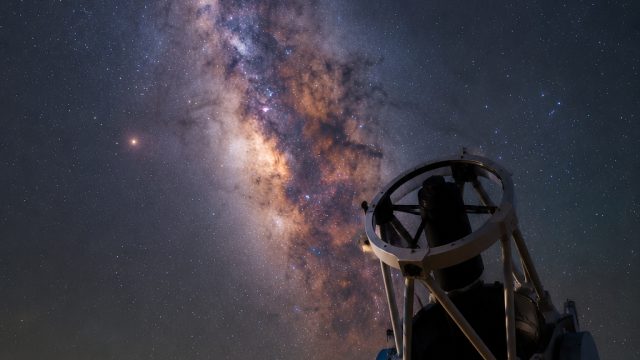
The excitement in the astronomical community is palpable as the European Space Agency (ESA) unveils the latest images from its Euclid telescope, which has delivered an extraordinary perspective of the Milky Way's center. This remarkable achievement reveals millions of stars in unprecedented detail, providing new insights into our galaxy and enhancing the hunt for exoplanets.
Euclid's Groundbreaking Imaging Technology
Launched to study dark energy and dark matter, ESA's Euclid telescope has quickly evolved into a powerful instrument for mapping the Milky Way. Its cutting-edge imaging capabilities allow astronomers to observe and analyze the dense star fields at the galaxy's core, leading to significant advancements in our understanding of stellar formation and evolution.
What Makes This Image Unique?
- Incredible Resolution: The Euclid telescope has captured images that unveil intricate details previously obscured in less advanced photographs.
- Star Density: The new images showcase a staggering concentration of stars within a small region, providing clues about the dynamics at play in the galaxy's center.
- Potential for Exoplanet Discovery: This enhanced view opens new possibilities for identifying distant planets surrounding these stars.
The Importance of Studying the Milky Way's Core
Understanding the Milky Way's heart is crucial for several reasons. Not only does it help astronomers map the structure of our galaxy, but it also sheds light on the processes that govern star formation and the potential for habitable planets in our cosmic neighborhood.
Opportunities for Future Research
With the wealth of data from Euclid, researchers now have unprecedented opportunities to explore:
- Stellar Evolution: Insights into how stars form and evolve over time within the crowded environment of the galactic core.
- Galactic Dynamics: Understanding the gravitational interactions among stars and how they influence the galaxy's structure.
- Exoplanetary Systems: Identifying and studying potential new exoplanets, focusing on their atmospheres and habitability.
What Lies Ahead for Euclid and Its Findings?
The inaugural images are just the beginning. The Euclid telescope is set to continue its observations, with a mission designed to last several years. As more data is gathered, the potential to discover exciting new astronomical phenomena expands, promising to reshape our understanding of the universe.
The Role of International Collaboration
The success of the Euclid mission is a testament to international partnerships in space exploration. Collaborations between ESA and NASA, among other organizations, enable the sharing of knowledge and resources, paving the way for groundbreaking discoveries in astrophysics.
Conclusion: A New Era in Astronomy
The unveiling of these detailed images of the Milky Way's core marks a significant milestone in our quest to understand the cosmos. As the Euclid telescope continues its mission, it brings with it not only incredible images but also the promise of advancing our knowledge of the universe and our place within it. The next chapter in astronomical research is unfolding, and the implications for exoplanet hunting are nothing short of exciting.
