

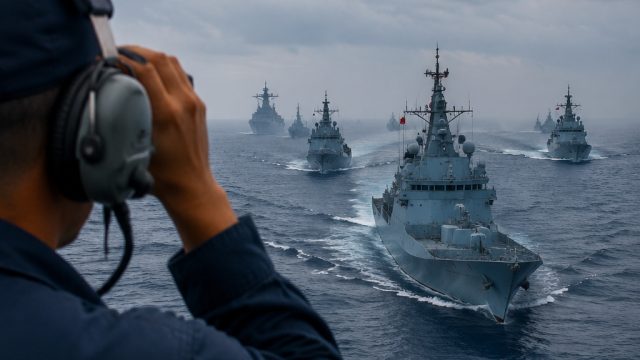
In a significant escalation of geopolitical tensions, leaders from the United States, United Kingdom, France, and Germany have jointly raised alarms regarding increasing Chinese naval patrols in the waters near Taiwan. This development comes at a time when global focus is intensely fixed on security and territorial integrity in the Asia-Pacific region.
Heightened Military Presence and Global Concerns
Recent reports indicate that China's military activities in the Taiwan Strait have intensified, with their advanced aircraft carrier, the Fujian, being observed conducting drills in the area. These maneuvers have prompted a united response from Western powers, who are increasingly wary of China's assertive maritime posture.
The Nature of Chinese Naval Operations
- The deployment of the Fujian aircraft carrier marks a significant milestone in China's military capabilities.
- Chinese naval forces have been conducting patrols that some view as a display of force aimed at asserting sovereignty over contested waters.
- The ongoing military exercises, particularly in proximity to Taiwan, have raised alarms about potential conflict escalation.
Implications for International Relations
The voice of Western leaders underscores the growing unease surrounding China's military ambitions. The U.S. and its allies view these actions as a direct challenge to international norms and the security of the Taiwan Strait, a critical shipping route. The situation is further complicated by Taiwan's own ambitions for sovereignty, which China vehemently opposes.
Joint Statement from Western Leaders
In a collaborative statement, the U.S., UK, France, and Germany emphasized the importance of upholding freedom of navigation in the region. They condemned the aggressive posture taken by China and reaffirmed their commitment to support Taiwan amidst rising tensions.
Potential Consequences for Trade and Security
The escalation in military presence also raises questions about the implications for global trade. The Taiwan Strait is not only a strategic military zone but also a vital artery for global commerce, particularly for semiconductors and electronic components that flow from Taiwan to the rest of the world. Disruptions here could have ripple effects in the global economy.
The Road Ahead: What This Means for the Future
As the international community watches closely, several questions remain unanswered. How will China respond to these protests from Western powers? Will there be an increase in military confrontations, or can diplomatic channels de-escalate the situation?
Global Responses and Potential Escalations
- Increased military collaborations among Western allies could be a strategic response to China’s growing assertiveness.
- Escalation could lead to sanctions on Chinese goods or military aid to Taiwan, further straining relations.
- Diplomatic efforts will be crucial in mitigating conflict; however, trust between the nations is at an all-time low.
Conclusion: A Critical Moment in Geopolitics
The developments in the Taiwan Strait represent a significant flashpoint in international relations. As countries navigate the challenges posed by China's military maneuvers, the choices made now will undoubtedly shape the future of stability in the region. Global powers must tread carefully to find a balance between deterrence and dialogue, ensuring that the situation does not spiral into a more profound crisis.
