

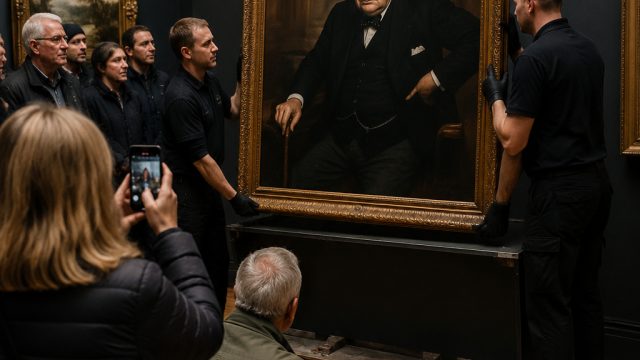
The National Portrait Gallery in London has recently made headlines after removing a video installation that sparked significant controversy regarding Winston Churchill's legacy. This decision has ignited debates about how history is portrayed in public spaces and the impact of such portrayals on contemporary society.
The Controversial Artwork
The artwork in question was a video installation that critiqued Churchill's role during a devastating famine in India during the colonial era. Critics of the installation argued that it unfairly blamed Churchill for the famine, while supporters contended that such discussions are essential for acknowledging the complexities of historical figures.
The Reaction
This removal has led to polarized responses. Proponents of the installation argue that it is crucial to confront uncomfortable truths about historical figures, especially those who have long been celebrated without scrutiny. Detractors, however, view this as an attempt to erase history rather than engage with it, raising concerns about censorship in the arts.
- Supporters emphasize the importance of critical historical narratives.
- Opponents fear the implications of artistic censorship.
- The debate has reignited discussions on how colonial histories are taught.
Cultural Implications of the Decision
The National Portrait Gallery's move reflects a broader trend within cultural institutions to re-evaluate their collections and the narratives they promote. As public sentiment shifts towards a more inclusive understanding of history, museums are grappling with how to balance historical reverence with accountability.
Art as a Reflection of Society
Art has always been a mirror of societal values and beliefs. The decision to remove the video installation underscores a pivotal moment in how institutions navigate the complexities of representation and historical accountability. Today's audiences are more aware and vocal about the legacies of colonialism, prompting a re-examination of revered figures.
What This Means for Future Exhibitions
As museums continue to respond to shifting public expectations, future exhibitions may increasingly focus on inclusivity and a wider array of historical perspectives. The National Portrait Gallery's actions exemplify the tension between honoring tradition and embracing a more nuanced understanding of history.
Potential Changes in Programming
Expect more institutions to incorporate diverse narratives into their programming. This might involve:
- Collaborations with artists and historians who specialize in post-colonial studies.
- Interactive exhibits that encourage audience engagement and critical discussion.
- Special events that invite community voices to share their histories.
Conclusion: A Turning Point for Museums
The removal of the Churchill artwork from the National Portrait Gallery is not just a singular event; it represents a turning point for cultural institutions navigating the challenges of historical representation. As museums commit to deeper explorations of the past, they must also consider how these narratives resonate within today's society. The conversation surrounding this artwork's removal will likely influence how history is portrayed in museums moving forward, paving the way for a more inclusive approach to our shared heritage.
