

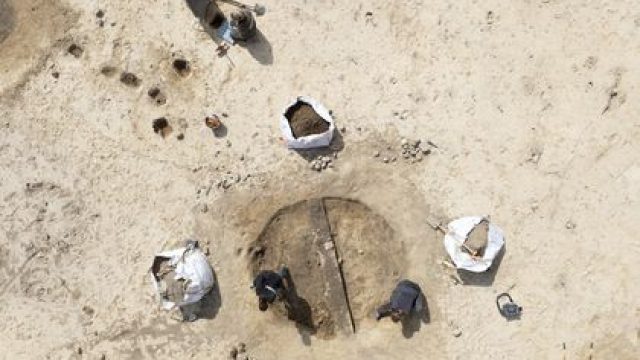
The recent unearthing of a substantial textile production site in Denmark is reshaping our understanding of the Vikings. Long regarded as brutal warriors and 'uncivilized' barbarians, this finding challenges those stereotypes, reflecting a society with advanced technological and artistic capabilities. This discovery is not just an archaeological find; it is a pivotal moment in reassessing the cultural legacy of the Viking Age.
Unearthing the Past: The Discovery
Archaeologists have identified a massive settlement that spans over a million square feet, believed to date back to the late Iron Age or the early Viking Age, approximately between 600 and 950 C.E. Located in a region rich with historical significance, this site showcases the Vikings' sophisticated textile production methods, which included weaving and dyeing processes that were advanced for their time.
Significance of Textile Production in Viking Culture
Textile production during this period was not merely a household task but a vital component of trade and economy. The discoveries at the site include:
- Large quantities of wool and linen remnants
- Tools indicative of weaving techniques
- Dyeing facilities suggesting vibrant color use in fabrics
This evidence points to a complex social structure where skilled artisans played a crucial role in the community, contradicting the image of a purely martial society. Such findings are crucial, as they enhance our understanding of Viking trade networks, which stretched far beyond their Scandinavian homelands.
Implications for Historical Narratives
The traditional narrative of the Vikings has primarily focused on their raiding and warfare activities. However, this latest discovery invites historians to reconsider the multifaceted nature of Viking life. The rich textile artifacts found at this site suggest that the Vikings were not only warriors but also skilled craftspeople and traders.
Broader Impact on Cultural Perceptions
As we delve deeper into Viking history, it's essential to recognize the societal elements that shaped their identities. The textile production site underscores the importance of crafts in fostering economic growth and cultural exchange. This shifts our perception from viewing the Vikings as mere raiders to acknowledging them as innovators and pioneers in various domains, including:
- Art and design through textile craftsmanship
- Trade routes that facilitated cultural exchanges across Europe
- Community organization that supported specialized trades
Such an understanding enriches the cultural narrative and emphasizes the Vikings' role in connecting different parts of the world through commerce and craftsmanship.
Why This Matters Now
As contemporary society grapples with issues of identity and cultural legacy, revisiting historical narratives can provide valuable insights. The discovery in Denmark serves not only as an archaeological milestone but also as a reminder of the complexities of human societies. Understanding the Vikings' dual identity as warriors and artisans can inspire current generations to appreciate the values of innovation and adaptability.
Lessons for Today’s Society
This significant finding bears relevance in today's world, where innovation and sustainability are paramount. Just as the Vikings utilized their environment for textile production, modern societies can draw lessons on the importance of resourcefulness and crafting a balanced identity that embraces both heritage and progress. The ongoing exploration of Viking culture thus not only illuminates the past but also serves as a guiding beacon for future generations.
Conclusion
The recent discoveries in Denmark are a testament to the Vikings' rich cultural legacy, showcasing their advancements in textile production and challenging long-held misconceptions about their civilization. As archaeologists continue to uncover layers of Viking history, we are reminded that our understanding of the past continues to evolve, reshaping narratives that define cultural identities. This recognition is crucial, inviting a broader appreciation of the complexities that have shaped human history.
